
VIP member

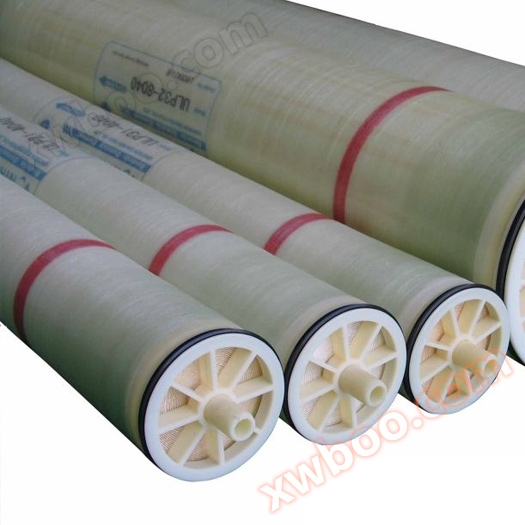
8040 4040 reverse osmosis membrane
Detailed introduction: Reverse osmosis membrane is the core component for achieving reverse osmosis, which is an artificial semi permeable membrane wi
Product details
Detailed introduction
Reverse osmosis membrane is the core component for achieving reverse osmosis, which is an artificial semi permeable membrane with certain characteristics made by simulating biological semi permeable membranes. Generally made of polymer materials. Such as cellulose acetate film, aromatic polyhydrazide film, and aromatic polyamide film. The diameter of surface micropores is generally between 0.5 and 10 nm, and the size of permeability is related to the chemical structure of the membrane itself. Some polymer materials have good repulsion to salt, but their water penetration rate is not good. Some polymer materials have a chemical structure with more hydrophilic groups, resulting in a relatively fast water permeation rate. Therefore, a satisfactory reverse osmosis membrane should have an appropriate permeation rate or desalination rate.
Reverse osmosis membranes should have the following characteristics: (1) they should have high desalination efficiency at high flow rates; (2) Has high mechanical strength and service life; (3) Capable of functioning at lower operating pressures; (4) Capable of withstanding the effects of chemical or biochemical reactions; (5) Less affected by factors such as pH value and temperature; (6) The raw materials for film making are easy to source, easy to process, and cost-effective.
There are two types of structures for reverse osmosis membranes: asymmetric membranes and homogeneous membranes. The currently used membrane materials are mainly cellulose acetate and aromatic polyamide. Its components include hollow fiber type, roll type, plate and frame type, and tube type. It can be used for chemical unit operations such as separation, concentration, and purification, mainly in the pure water preparation and water treatment industries.
Online inquiry
-
Contacts
-
Company
-
Telephone
-
Email
-
WeChat
-
Verification Code
-
Message Content
-