
VIP member
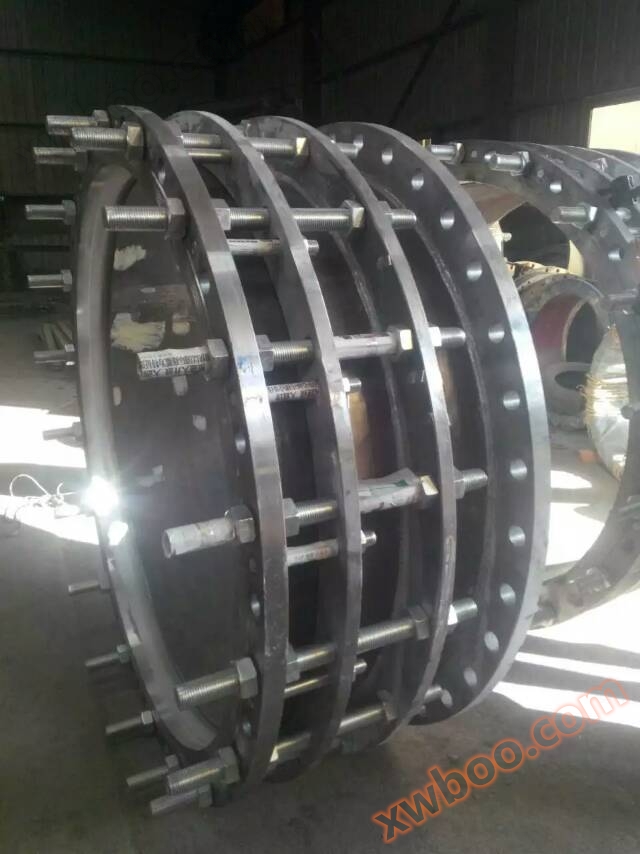
Full stainless steel double flange limit expansion joint
The all stainless steel double flange limit expansion joint is suitable for connecting both sides to the flange. During installation, adjust the conne
Product details
The all stainless steel double flange limit expansion joint is composed of main components such as the body, sealing ring, gland, and expansion short pipe. On the basis of the original performance of the loose expansion joint, a limit device is added and locked with double nuts at the maximum expansion position. The pipeline can freely expand and contract within the allowed expansion and contraction range. Once it exceeds its maximum expansion and contraction range, it serves as a limit to ensure the safe operation of the pipeline. It is particularly suitable for connections in pipelines with vibration or certain slopes and bends.
The all stainless steel double flange limit expansion joint is suitable for connecting both sides to the flange. During installation, adjust the connection length between the product's two ends and the flange, tighten the gland bolts diagonally and evenly, and then adjust the limit nut. This allows the pipeline to freely expand and contract within the expansion range, locking the expansion amount and ensuring the safe operation of the pipeline. Suitable for pipelines connected to flanges on both sides, adjust the installation length of the product at both ends and the flange during installation, evenly tighten the gland bolts diagonally to form a whole, and have a certain displacement, making it convenient to adjust according to the on-site dimensions during installation and maintenance. During operation, reverse axial thrust can be transmitted to the entire pipeline. It can reduce the pressure thrust (blind plate force) of the connected parts and compensate for pipeline installation errors. The double flange force transmission joint cannot absorb axial displacement. Double flange force transmission joints are mainly used for loose connections of accessories such as pumps and valves.
The materials of all stainless steel double flange limit expansion joints mainly include Q235 carbon steel, stainless steel, cast steel, ductile iron, etc. Choose different materials and models for different purposes.
Online inquiry
-
Contacts
-
Company
-
Telephone
-
Email
-
WeChat
-
Verification Code
-
Message Content
-