VIP member
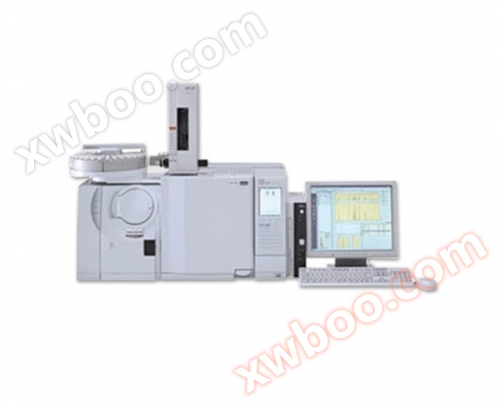
Gas chromatography-mass spectrometer GCMS-QP2010E
Front opening ion source gate - easy to maintain Shimadzu chromatograph manufacturer has always advocated this unique design concept, which facilitate
Product details
Front opening ion source gate - easy to maintain
ShimadzuchromatographThe manufacturer has always advocated this unique design concept, which facilitates users to clean, maintain, and replace ion sources without dismantling complex vacuum parts. The mass spectrometry navigation function (MS NAVIGATOR) on GCMSsolution demonstrates how to maintain ion sources, filaments, chromatography columns, and injection ports. In addition, the teaching CD helps users quickly master mass spectrometry technology.
• Fast scanning speed - quick analysis
A scanning speed as fast as 10000 amu/sec is beneficial for rapid GCMS analysis. For industries with complex components, such as essence and fragrance, petrochemical industry, bioenergy, etc., it can quickly obtain the mass spectrum information and content of each component in the sample, effectively shorten the analysis time, and improve the experimental flux.

Direct injection analysis
Liquid or solid samples that cannot be analyzed by gas chromatography can be directly introduced into mass spectrometry for analysis using a direct injection rod. The direct injection analysis method meets the needs of users for rapid identification of pure samples or HPLC collected fractions.
DI method is used for the analysis of Liriopine


• Rich sample import system
The AOC-5000 provides SPME, headspace, and automatic liquid injection functions The blowdown capture system is suitable for analyzing volatile organic compounds in water. The PY-GCMS system for high-temperature cracking can provide more information on the composition of non-volatile samples such as polymers and additives.
• Systematic solution - Analysis method package (VOC and SVOC analysis in the environment, pesticide residue analysis in food)
To comply with the requirements for VOC and SVOC analysis in drinking water as outlined in the Environmental Protection Agency (EPA) analysis methods of the United States and the National Standard Methods for Drinking Water in China, an analysis method package can be selected to meet the data collection, calibration, compound identification, and data reporting requirements for VOC and SVOC analysis. There are also methods for analyzing pesticide residues that meet the needs of multi-component qualitative and quantitative analysis in the fields of food safety and environmental protection.

Analysis of VOC components corresponding to Appendix A of the standard test method for drinking water (GB/T 5750.8-2006)
Shimadzu Corporation reserves the right of final interpretation for this product.
Online inquiry
-
Contacts
-
Company
-
Telephone
-
Email
-
WeChat
-
Verification Code
-
Message Content
-