
VIP member
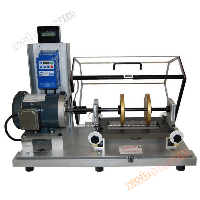
Mechanical Fault Comprehensive Simulation Test Platform - Simplified Version MFS-LT
Mechanical Fault Comprehensive Simulation Test Platform - Simplified Version MFS-LT
Product details

The multifunctional experimental platform allows you to enjoy more benefits!
The occurrence of mechanical failures can affect product quality in mild cases, lead to production stoppage in severe cases, and affect the entire operation process. The predictive maintenance technology based on state monitoring detects faults and takes corresponding measures before they occur, which is an effective means to ensure the normal operation of equipment and avoid economic losses. The predictive maintenance technology ultimately relies on accurate and effective vibration signal acquisition, corresponding analysis, extraction of vibration characteristics, and construction of a mapping relationship with equipment status. Our company's "Mechanical Fault Comprehensive Simulation Experiment Platform - Simplified Version" is an innovative tool that can simulate common mechanical equipment faults for fault diagnosis research without affecting your production schedule and profits. The modular component design makes the experimental bench powerful, easy to operate, and reliable in performance. All components are coordinated reasonably and will not produce additional vibrations. You can fully preset various single faults and mixed faults according to your needs, making it the best tool for learning and researching mechanical fault diagnosis.
The best tool for learning and researching mechanical fault diagnosis
If you want to gain a deeper understanding of different fault vibration characteristics, you need an experimental platform that can preset faults to simulate actual mechanical faults. By examining the relationship between the spectral characteristics of a single fault and its dynamic characteristics, resonance frequency, rotational speed, etc., we aim to provide you with an understanding of the actual vibration characteristics of mechanical faults.
By using the "Mechanical Fault Comprehensive Simulation Experiment Platform - Simplified Version", professional skills required for industrial machinery fault diagnosis can be trained and cultivated. Under normal production conditions in the factory, it is almost impossible to understand the power characteristics of equipment without affecting output and efficiency. Using the "Mechanical Fault Comprehensive Simulation Experiment Platform - Simplified Version" to conduct offline experiments and training will minimize downtime to the greatest extent possible.
Features:
● Facilitate the introduction of controllable and calibratable mechanical faults.
Through course training, learn common fault symptoms and vibration characteristics.
Provide an experimental platform for improving experimental operations and skills.
Used for learning mechanical equipment status monitoring and predictive maintenance.
The training manual comes with examples to provide reference for experiments.
Understand resonance and transmission fault diagnosis.
Study the process and mechanism of vibration transmission.
Study the dynamic balancing process before and after the first critical speed.
Application:
● Dynamic balance
● Axis straightening
● Axis straightening system evaluation
● Coupling research
● Bearing failures and load effects
● "Warped" rotor
● Eccentric rotor
Resonance research
Research on sleeve bearings
| Electrical parameters | |
| electric motor | 1 horsepower 3-phase electric motor, pre connected self straightening system easy to disassemble and replace |
| drive | 1 horsepower variable frequency AC drive, multifunctional programmable control panel |
| speed range | 0 to 6000 revolutions per minute (short-term) |
| tachometer | Built in tachometer with LCD digital display and a pulse analog TTL output for data acquisition |
| voltage | 115/230V AC, single-phase, 60/50Hz |
| mechanical parameters | |
| axis | 5/8 inch diameter; Turning, grinding and polishing, steel |
| bearing | Two sealed rolling bearings are installed in aluminum detachable bearing seats for easy installation and replacement. There is an internal threaded hole for installing sensors. The bearings can be installed in five different positions according to the changing rotor span |
| Rotor support | 15 inches long, fully movable, adjustable horizontally through positioning bolts, and vertically through standard washers. Positioning holes facilitate straightening again |
| rotor |
Two 6-inch aluminum rotors with 36 threaded holes distributed every 10 degrees to introduce imbalance |
| protective shield | An impact resistant transparent protective cover with a lock, equipped with a motor interlock switch. When the protective cover is opened, the motor stops |
| base | 1/2 inch (12.7mm) die cast aluminum base, base reinforcement plate, and six rubber isolation blocks |
| physical parameters | |
| weight |
Approximately 100 pounds (45 kilograms) |
| size | Length 32 feet (80 centimeters), width 14 inches (36 centimeters), height 22 feet (55 centimeters) |
Online inquiry
-
Contacts
-
Company
-
Telephone
-
Email
-
WeChat
-
Verification Code
-
Message Content
-