
VIP member

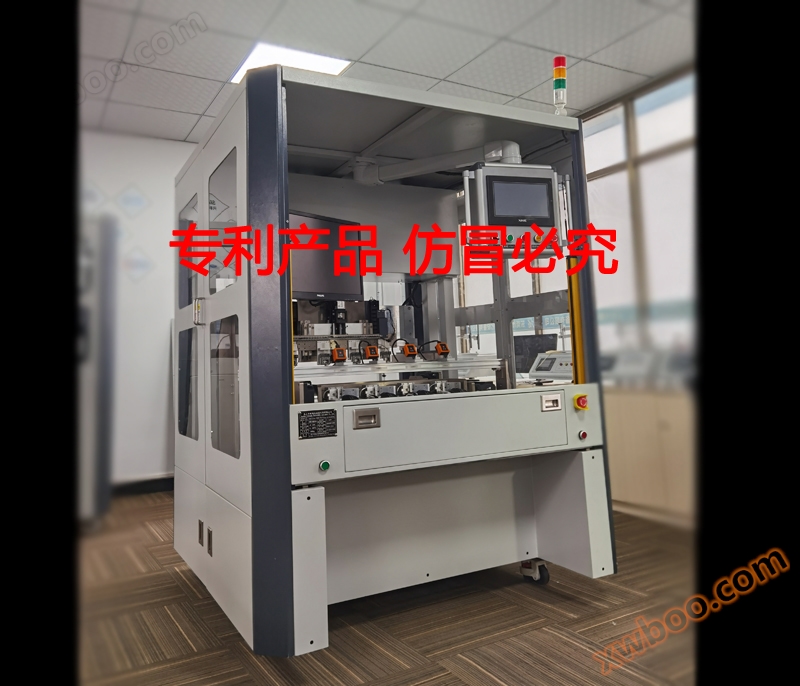
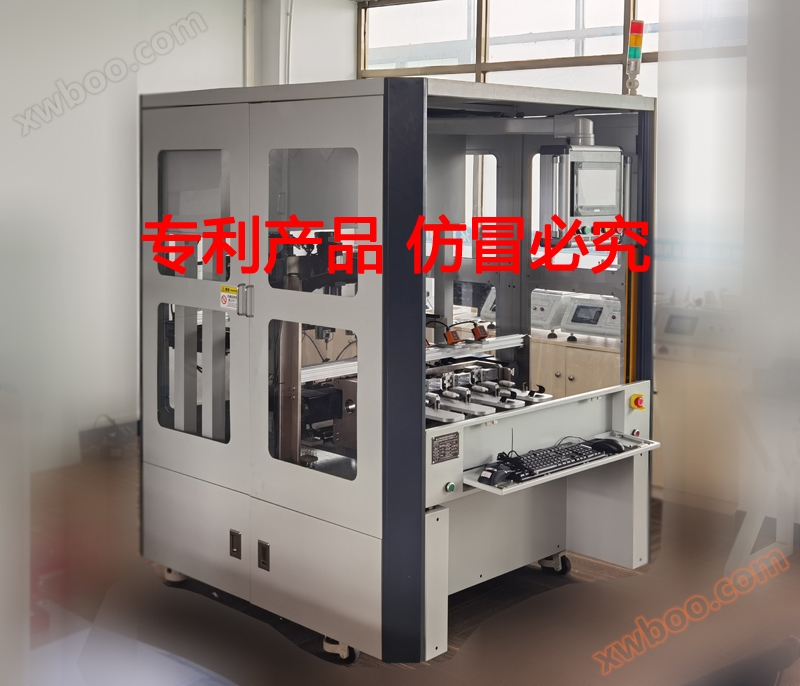
Mouse performance testing machine
Mouse Performance Testing Machine Mouse Performance Testing Machine is used for online testing of the all-around automatic flipping of mouse buttons i
Product details
Machine characteristics
The mouse performance testing machine is used for online testing of the all-around automatic flipping of mouse buttons in e-sports. The product is placed in the testing area through manual loading and unloading. After the product is placed, the software executes the testing action. The action ends, and the product testing result status data is color marked and displayed. If the testing status isOK, Continue with the next mouse button test. If an NG product appears midway, the corresponding position of the test item data will be highlighted in red. After the mouse point position test is completed, a comprehensive judgment will be made on the results of the entire test point position.
Machine features
1. Can achieve signal output stroke testing for mice;
2Test the document thoroughly and determine the load/The travel tolerance can be automatically and accurately switched with the point position, and OK/NG judgment can be performed accordingly;
3data-Integrated real-time tracking of curves;
4. Complete categories of test items, refined algorithms, and ready to use upon addition;
5Test efficiency100-150 per hour (depending on the number of testing points);
6. Scan the barcode gun to enter the mouse recognition code;
7Based on customer needsSFC upload function (non configured item);
8microcontroller/Software independent research and development;
9Manual assisted loading and unloading of materials+Four axis degree of freedom flipping;
10. Grating security protection.
Specifications
Product Model |
XHD-MS004 |
control system |
Independently developed, with built-in control system |
computer |
industrial-grade |
load cell |
2Kgf(precision0.03‰FS) |
Probe specifications |
Diameter corresponding to a single sensor1mmThe2mm probeEach one; |
X/Y direction translation speed |
50-5000mm/min |
Z-directionmovespeed |
05000mm/min |
Machine dimensions |
L1400mm*W1400mm*H1800mm |
Use power supply |
220V,60HZ |
Product Requirements

Schematic diagram of testing station


Mouse button test item category
Chinese name of test item Test Item Symbols Test item definition Peak point1 load value (go) OF/PT The position of the first peak load value during the journey. (The load curve of the journey changes from small to large. When there is a transition from large to small and exceeds a certain ratio or force value, this point is captured as the peak position.) Valley Point1 load value (go) BF/BT The location of the first load valley point during the journey. (The load curve of the journey goes from small to large. When there is a transition from large to small and exceeds a certain ratio or force value, this point is captured as the valley position.) Peak point1 Load value (back) MF/MT On the return journey, the position of the first peak load value. (The load curve of the return journey changes from small to large. When it changes from large to small and exceeds a certain ratio or force value, this point is captured as the valley position.) Valley Point1 Load value (back) RF/RT The location of the first load valley point during the journey. (The load curve of the journey goes from small to large. When there is a transition from large to small and exceeds a certain ratio or force value, this point is captured as the valley position.) Click Force/Rate(回) rCf/CC(BACK) Peak pointThe force value obtained by subtracting the load value of the valley point from the load value of the valley point is Click Force/Rate. And ClickForce divided by the peak point 1 load value (removed) multiplied by 100% is the rate Turning point before departure TP(GO) The load and travel value of the corner of the travel graph can be set to the upper and lower limits of the test item travel. Currently, the default travel upper limit is0.1 Turning point after departure TTF Load and travel value at the corner of the straight line in the travel graph Turning point before returning TP(BACK) The load and travel value of the corner of the return graphic can be set to the upper and lower limits of the test item travel. Currently, the default travel upper limit is0.1; Turning point after return journey rTTF Load and travel value at the corner of the straight line in the return graph Press slope K(GO) Peak load during travel-Load at the turning point before departure/(peak travel before departure - turning point travel before departure)=k Rebound slope K(BACK) Return peak load-Load at the turning point before returning)/(Peak travel before returning - Turning point travel before returning)=k Press slope2 K2(GO) Turning point and valley point after departureThe slope of the load value, (load at the turning point after departure - load at the valley point after departure)/(stroke at the turning point after departure - stroke at the valley point after departure)
product image
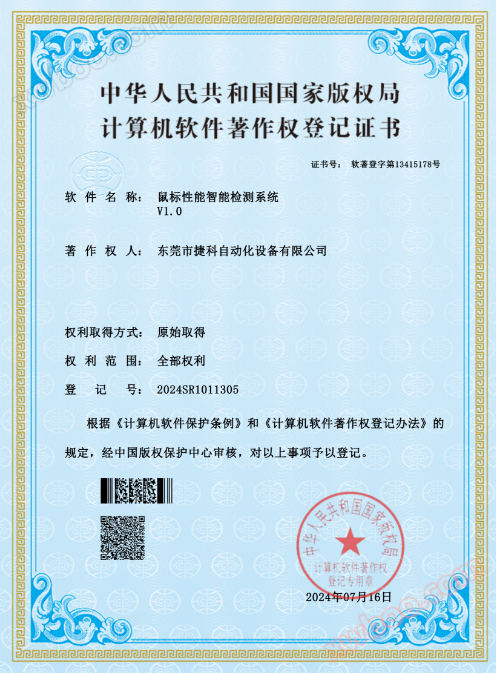
Software certificate
This device is the general agent for the East China region
Kunshan Xinhongda Measuring Instrument Co., Ltd
Contact: Du Bin
Phone:
Online inquiry
-
Contacts
-
Company
-
Telephone
-
Email
-
WeChat
-
Verification Code
-
Message Content
-