
VIP member
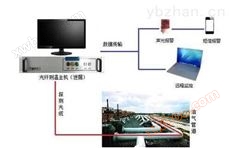
Principle of Distributed Fiber Optic Temperature Measurement System
The principle of the distributed fiber optic temperature measurement system is the distributed fiber optic temperature measurement system (DTS) that i
Product details
Principle of Distributed Fiber Optic Temperature Measurement System
Continuous distributed temperature measurement without measurement blind spots
※ Optical signal transmission, * electrical insulation, intrinsic safety, anti electromagnetic interference
Fiber optic sensors are easy to install and lay
※ Long measurement distance, able to accurately locate the location of temperature anomalies
※ Fiber optic has a long lifespan and is maintenance free for decades
※ Fast measurement speed, high accuracy, and low false alarm rate
Principle of Distributed Fiber Optic Temperature Measurement System
Technical advantages:
We can provide DTS with industry wide spatial resolution, up to 0.3 meters
The high sampling rate is one order of magnitude higher than that of industry manufacturers, reaching 2GSa/s
Ultra low power consumption, the device operates with a power consumption of about 6W and can be used as a handheld device
The device uses a single Ethernet cable to transmit measurement results, which is reliable, easy to use, and easy to network
Performance indicators:
| measure distance | 0~10km |
| Channel measurement time | 典型2.5秒 |
| Temperature resolution | 0.1℃ |
| spatial resolution | 0.5~2 meters |
| Temperature measurement accuracy | 1.0℃ |
| 定位精度 | ≤1.0m |
| sampling interval | 0.5m |
| number of channels | 1/2/4/8/16 optional |
※ The whole machine has a fanless design, wireless cable connection, and good long-term reliability during operation
The product can provide multimode/single-mode fiber versions
Customized wall mounted or handheld DTS products are available, which can be powered by batteries or solar energy
System Overview
BOTDRThe technology was initially applied in the aerospace field, and in developed countries, it has been successively applied in fields such as power, communication, and engineering. In the engineering field, it is mainly used for safety monitoring of large foundation projects such as bridges, dams, and tunnels, and has achieved many successful experiences. Especially in the fields of civil engineering, transportation, geological engineering, and disaster prevention and control, its application has also received widespread attention from research institutions in various countries, and its development prospects are very promising. The LIOS BOTDR system holds a leading position in the industry.
Large scale foundation engineering will undergo varying degrees of deformation under various loads and external environmental effects. This deformation is generally difficult to observe with the naked eye in the initial stage and is unevenly distributed. The strain is often only on the order of -5 to -7, mainly concentrated in the stress concentration zone of the structure. In addition, for deformation monitoring of large-scale foundation projects, there are also some characteristics: large project scale, large environmental differences, high requirements for real-time dynamic monitoring, and high requirements for monitoring accuracy. Obviously, traditional monitoring techniques and methods are no longer sufficient to meet its monitoring requirements, and a new monitoring technique and method are needed to adapt to it. The distributed, long-distance, remote real-time monitoring and good fiber durability of BOTDR perfectly compensate for the shortcomings of traditional monitoring technology. Therefore, researching and developing BOTDR technology is of great significance for the application of deformation monitoring in large-scale foundation engineering.
LIOS BOTDR technology has good application value in temperature and stress deformation monitoring. Has the following characteristics:
1. Distributed - BOTDR has achieved distributed strain measurement with a large spatial resolution of 1m. Based on the on-site situation, various specific laying methods can be used to avoid subjective speculation in the selection of monitoring points and to monitor the overall condition of the structure.
2Monitoring of Cumulative Damage - BOTDR is suitable for monitoring the cumulative damage of structures. By comparing with past data, it is clear that small changes have an impact on the tunnel structure on the time axis. By using mathematical models and other analytical methods, predict the future development direction of the structure and provide early warning of possible accidents and quality problems.
3Long distance - BOTDR's nominal measurement distance can reach up to70kmRequirements for various structures.
4Real time performance - BOTDR achieves real-time data collection, which can reflect the current stress and deformation state of the structure and achieve real-time dynamic monitoring.
5High precision——Strain accuracy of 20 microstrain, temperature accuracy of 1 degree.
6.Single ended measurement. No need to form a measurement loop.
7.Ultra long distance temperature measurement. By using stress free optical cables, BOTDR can accurately measure a length of 70 kilometers and 16 additional channels.
Online inquiry
-
Contacts
-
Company
-
Telephone
-
Email
-
WeChat
-
Verification Code
-
Message Content
-