
VIP member
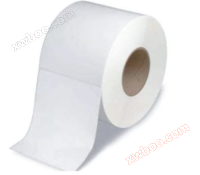
Adhesive label paper
Kingma Software is a company focusing on the development of the warehouse management system. The independently developed software systems include: e-c
Product details
Jingoma Software is a company specializing in the development of warehouse management systems. Our independently developed software systems include e-commerce WMS warehouse logistics management system, warehouse inventory management software, MES production system, barcode management system. We have launched UFIDA barcode, NC barcode, U8 barcode, K3 barcode, and provide one-stop enterprise barcode system solutions for different customer needs
The self-adhesive label paper has the advantages of no glue brushing, no paste, no dip in water, no pollution, saving labeling time and other advantages with traditional labels. It has a wide range of applications and is convenient and fast. Adhesive tape is a type of material, also known as self-adhesive label material. It is a composite material made of paper, film, or other special materials, with adhesive coated on the back and silicon coated protective paper as the base paper. And after printing, die-cutting and other processing, it becomes a finished label.

Adhesive stickers are a type of self-adhesive label material, usually with adhesive on the back and protected with silicone coated protective paper. The fabric is made of film or paper as raw materials, and the surface can be used to write text and depict patterns. Adhesive paper can not only effectively prevent pre impregnated materials from sticking together, but also prevent pre impregnated materials from being contaminated. The back of adhesive paper is usually coated with adhesive, so it is widely made into labels, stickers, etc.
How to use self-adhesive label paper
Simply peel off from the base paper and press lightly to apply to the surface of various substrates, or use a labeling machine to automatically label on the production line.
The purpose of self-adhesive label paper
Common labels include drug labels, food labels, alcohol labels, battery labels, outer box labels, shampoo labels, barcode labels, temporary labels for semi-finished products, and so on.

Mainly paper and film
Mainly used for decorative stickers on cars and motorcycles, identification text on trademark display windows, reflective film on highways, markings on containers, etc.
Divided into basic tags and variable information tags according to their application scope.
Variable Information Label
Batch number, sequence code, barcode, production date, expiration date, price, mailing process information processing, distribution, warehouse management, inventory data, etc.
daily chemical industry
Adhesive labels have been widely used in the daily chemical industry. It is reported that currently, the proportion of domestic daily chemical products using adhesive labels as labels exceeds 30%. According to statistics, the adhesive labels on the domestic market still maintain a rapid growth momentum in the daily chemical industry and are widely used. Label materials will also develop towards higher levels and diversification.
Daily chemical products have high added value, so there are many brands and fierce competition. Consumers choose a product from a wide variety of goods, and the packaging of the product is a key factor in attracting consumers. The packaging of daily chemical products is important for the label, and the delicacy of the label plays a key role. Adhesive labels can perfectly reflect the requirements of the label.
pharmaceutical industry
With the issuance of GMP certification standards by the country, the pharmaceutical industry has higher requirements for the standardization of drug packaging, both in terms of hygiene and aesthetics. Adhesive labels can effectively meet the needs of drug packaging, provided that the adhesive material meets hygiene standards. On the one hand, the pharmaceutical industry has high production requirements and fast assembly line operations. Many drug bottles require automatic labeling to meet the requirements during labeling; On the other hand, self-adhesive materials are suitable for various printing methods, with clear graphics, neat and strong adhesive effects, making self-adhesive labels meet the market's requirements for drug packaging.

During the flourishing period of OTC, consumers' requirements for drug packaging are definitely increasing. They hope that the label is not only a description, but also a brand logo. At the same time, pharmaceutical products also attach great importance to anti-counterfeiting. There are various materials to choose from for adhesive labels, such as easily shredded paper, font anti-counterfeiting labels, etc.
electronics industry
Electronic devices have now spread to every corner of people's lives, and the further popularization of home appliances and communication tools has led to unprecedented development in the electronics industry.
Supermarket logistics industry
With the development of the market economy and the acceleration of commodity circulation, China's retail industry is developing at an extraordinary speed. According to the National Bureau of Statistics, there are a total of 1232 chain enterprises above designated size in China's commercial retail and catering industries, with a total of 34551 stores. In the future, there will be an increasing demand for variable information printed labels in the market, such as fresh food in supermarkets. Due to their fast circulation speed and lucrative profits, they have always been a "battleground", and thermal labels have great development space as a result. For example, luggage tags, supermarket price tags, storage and transportation tags, etc., are now widely used. In some logistics developed countries in Europe, self-adhesive labels used for variable information printing have accounted for more than 40% of the total demand in the self-adhesive label market. In China, this market is just starting, and the annual per capita consumption is negligible. Foreign retail giants and local private enterprises both aim to become bigger and stronger as their future development direction. The logistics industry is an emerging industry, and many large and medium-sized cities in China hope to play the role of logistics centers. Using barcodes for production and logistics management is a basic requirement for barcode adhesive labels. While more enterprises are experiencing the benefits of barcode management, it will also bring unlimited business opportunities to the self-adhesive industry. With the rapid development of the logistics industry, there will be a huge demand for variable information adhesive labels in the market.
Anti counterfeiting industry
The characteristics of self-adhesive labels meet the application conditions in the anti-counterfeiting industry. The earliest anti-counterfeiting labels in China appeared in the mid-1980s, with applications in various fields such as alcohol, food, medicine, health products, cosmetics, children's products, toys, clothing tags, shoe labels, computer software and hardware products, sports goods, automotive parts, agricultural supplies, etc. The use of adhesive anti-counterfeiting labels on products has a wide market development space in China.
In short, the application characteristics of self-adhesive labels can be utilized to view them as carriers of anti-counterfeiting information, making their application scope more extensive and personalized information labels more promising. Especially with the current policies and regulations introduced by the country (such as requiring imported products to be labeled with Chinese explanations, origin marks, etc.), it has provided market space for the application of stickers and business opportunities for sticker printing.
According to the regulations of the General Administration of Quality Supervision, Inspection and Quarantine, the market access system for meat products, dairy products, beverages, seasonings, frozen foods, instant noodles, biscuits, canned foods, frozen rice and flour foods, puffed foods and other food products has begun to be implemented, and QS labels must be affixed before they can leave the factory and enter the circulation field. In addition, the General Administration of Quality Supervision, Inspection and Quarantine of the People's Republic of China has also stipulated that from August 1st this year, mandatory certification (i.e. 3C certification) must be implemented for 132 types of goods in 19 major categories across the country (involving electronics, home appliances, air conditioners, and other products). It is required to use six specifications of adhesive labels, and products without the 3C mandatory certification label are not allowed to leave the factory or enter the circulation field for sale. This regulation also provides business opportunities and markets for adhesive companies.
Adhesive labels are very popular in this field, not only because they can be affixed, printed, and designed, but also because electronic products require the use of labels to achieve specific effects. For example, the texture of the label is firm and can work well with electrical appliances, or the label can resist corrosion and high temperatures from the external environment. Often, multiple forms of label materials are needed in different parts of an electrical product. The huge development of the electronics industry, especially in southern and eastern China, has led to a relatively large proportion of exports and is the main region driving the consumption of adhesive label materials. Like other fields, label materials used in the electronics industry generally have high requirements, and many multinational companies have their own strict testing methods, such as measuring viscosity, scratch resistance, temperature resistance, etc. But generally speaking, many companies have requested that label materials have UL certification.
At present, the combination of adhesive, flexible, concave, convex, and screen printing equipment has pushed traditional labels and trademark products to new heights; The digital system has opened up a whole new market for labels and trademarks. Currently, the key to the continued development of the domestic adhesive label printing market is not whether the industry blindly follows the mainstream of "flexographic printing" in Europe and America, or imitates the mainstream of "convex printing" in Japan, but how to combine it with the national conditions and based on the nature of the product itself. Select or combine printing process routes and corresponding equipment systems with high cost-effectiveness based on their characteristics. Because under certain conditions, the quality of printed adhesive labels using various modern printing techniques is almost indistinguishable, and the difference lies in the adaptability of the process route and the input-output benefits.
Online inquiry
-
Contacts
-
Company
-
Telephone
-
Email
-
WeChat
-
Verification Code
-
Message Content
-