
VIP member
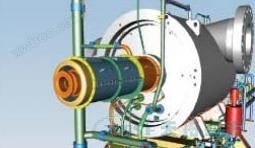
Through global collaborative transformation and innovation process
Siemens Power Generation (PG) is one of the leading companies in the international power generation industry, with the whole being greater than the su
Product details
The whole is greater than the sum of its parts
Siemens Power Generation (PG) is one of the leading companies in the international power generation industry. It has approximately 33500 employees worldwide. The industrial applications business unit of Siemens Power Group employs approximately 11000 employees, distributed in over 50 locations worldwide. These include major design and engineering centers (with over 800 employees in each center; some up to 2500), small manufacturing and service capability centers, and numerous regional organizations.
The design, manufacturing, and support processes of industrial sector products, including gas or steam turbines and process compressors, are carried out on multiple continents. When you also consider where to manufacture products (in Eastern Europe, South America, or other low-cost manufacturing centers), you are seeking a global development process. In the fiercely competitive business, the challenge is to transform businesses that operate independently in different locations around the world into departments with global collaboration and rapid new product development capabilities.
This transformation has begun to be achieved through the use of UGS's Product Lifecycle Management (PLM) solution and integration with mainstream ERP solutions provided by SAP. We have transformed from a series of independent businesses into a virtual organization, "said Alan Walker, project leader of Siemens Collaborative Product Definition. We are looking for a solution that allows us to transfer data within a global virtual organization. Teamcenter ® Software has given us this ability and allowed us to transition from multi site and multi CAD operations to a more integrated mode of operation, making us more competitive. ”
Global challenges require a comprehensive solution
The challenges of creating this virtual global organization include physical separation between various sites and the use of different CAD, ERP, and product data management solutions. Due to their dispersion, a large amount of travel becomes necessary, which usually means that each person loses at least one day of production capacity during one-way travel. Of course, there are also costs such as airfare and accommodation, "Walker said. But the real cost of travel is the loss of production capacity. Or, if someone decides not to travel, they will lose their participation
As for the many different software solutions used, their intention is not to have each site use the same system, but to achieve collaboration by supporting different data formats. A more important consideration regarding data is the security of electronic information during the transmission process from site to site. If this information is stored on a CD, storage stick, or similar medium, it is very easy to replicate and therefore vulnerable to attacks, "Walker said.
Other issues related to geographical distance include excessively long design review times, as well as different sites being forced to duplicate work or create designs that already exist in other locations. In addition, a key goal is to reduce non-compliance issues during the design phase, which can stem from the geographical distance between relevant sites.
Teamcenter creates collaborative communities
In order to overcome the challenges of global product development, Siemens has implemented Teamcenter engineering process management and community collaboration functions. Today, design and manufacturing sites still use their original CAD/CAM solutions, including Pro/Engineer and NX ™ And I-deas ® NX series software. Suppliers' expansion enterprises and third-party design agencies also use software such as Solid Edge ® Tools such as AutoCAD software. Each site carries out work in three dimensions based on the collaborative product data model. Although the data is stored in the local Teamcenter database, these databases are now linked together through Teamcenter's multi site functionality, allowing one site to access updated information from another site. Therefore, everyone involved in the project can be confident that they are always utilizing the correct data.
In addition to the engineering environment, Teamcenter supports global collaboration by enabling product information and providing access to Siemens' stakeholders. Personnel from other parts of the organization (sales, service, manufacturing, suppliers, and third parties) can more easily provide input information throughout the entire product lifecycle.
The widely used solution in many parts of an organization is Teamcenter's community collaboration technology, which is an easy-to-use network environment tightly integrated into the Teamcenter product portfolio. Siemens users use it to achieve collaboration, share files, data, and models, and post them on a common network address. Teamcenter enables users to view engineering data in a lightweight CAD neutral format (JT file). Those who were previously unable to access CAD software or the Teamcenter engineering data management environment can now view and mark this data, allowing for faster design reviews and broader collaboration in the early stages of the design process. The effect is that Siemens reduces errors in downstream production and installation processes.
The community collaboration feature of Teamcenter bridges the gap between different engineering applications and provides a lightweight, user-friendly product view. The embedded visualization function integrates models created by different CAD systems into virtual assembly. For example, design review can integrate turbine or compressor components provided by various suppliers into a complete assembly. Reviewers can operate the assembly on the screen to conduct a more comprehensive design review. Due to the inclusion of online conferencing functionality in Teamcenter, the need for business trips to participate in design reviews has been reduced, and a more powerful processing method has been implemented.
Transforming the innovation process
Teamcenter is transforming innovation processes through team collaboration, "said Alan Wilds, Product Development Director for Siemens Gas Turbine Business. We can now notify contacts globally in real-time, instead of having to schedule meetings a few days or even weeks in advance. These improvements not only include our own business units, but also extend to many suppliers. among whichmoreAn important point is that information is now more secure and controlled in the process of crossing the globe.
Alan Wilds explained, "Teamcenter allows us to better control our intellectual property. Although it is based on the Internet, it greatly reduces the previous risks. We send highly encrypted information through the Internet, and we can also track this information. We can accurately know who logged into the system and what information they accessed. It's much better than our previous control methods, and it's very important for our business. ”
Nowadays, it is easier for people to achieve collaboration (with fewer business trips and file transfer delays) and more effectively (with better design reviews and greater utilization of engineering data). Therefore, Siemens expects to reach a new level of productivity, which will help it achieve its goals of accelerating market launch and reducing non conformance costs. Axel Hoynacki, Head of Process Optimization and Product Standardization at Siemens Compressor Business Unit, believes that "we are under considerable global pressure. We need to cross the physical boundaries of the world. By adopting an integrated solution of Teamcenter and SAP, we have the opportunity to achieve this goal. ”
Furthermore, Teamcenter's impact on collaboration has helped Siemens improve quality. After using Teamcenter, we found that the design review time was shortened, which can be measured, and design reuse was increased, "Hoynacki said. As a natural result, in addition to having more time and being able to better utilize data, we also expect product quality to improve. More specifically, due to having the correct data in hand, non conformance issues caused by geographical segregation will be significantly reduced compared to developing sites independently
Online inquiry
-
Contacts
-
Company
-
Telephone
-
Email
-
WeChat
-
Verification Code
-
Message Content
-