
VIP member
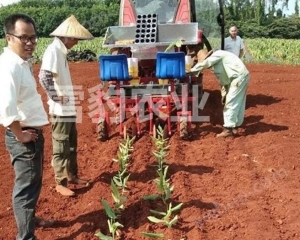
Two row tobacco transplanter
Description: Weifang Xuebao Agricultural Equipment Co., Ltd. is an enterprise that focuses on the mechanization and research and development of modern
Product details

At present, the main crops of seedling transplanters are vegetables such as tomatoes, peppers, lettuce, onions, and cabbage. Economic crops such as rapeseed, cotton, and sugar beets. Corn and other food crops. Artificial transplantation has problems such as high labor intensity, low efficiency, and uneven row spacing after transplantation, which can affect the subsequent processes of plant protection and harvesting. With the maturity of factory seedling technology and the continuous increase in labor costs, large-scale transplanting operations need to be completed using transplanting machines. Transplanting technology can utilize solar thermal resources, mainly to compensate for climate, and the use of land resources is also relatively economical. It can increase the index of crop replanting, advance the growth period of crops by half a month, and avoid climate impacts such as early spring, late spring frost, hail, and low temperature. Not affected by natural disasters such as drought, improving the probability of seedling survival rate, and enabling crops to meet agronomic requirements.
Online inquiry
-
Contacts
-
Company
-
Telephone
-
Email
-
WeChat
-
Verification Code
-
Message Content
-